Wednesday, 17 July 2013

Try Praying

It’s the work of a traffic planner, a shop manager, a writer, a designer, an entrepreneur, a civil engineer and others.
A conversation on a train went like this.  The guy in his 20s was asked, “Do you ever pray? “  His reply was, “Yes.  I prayed for two people who were seriously ill.  One died and the other got better.”  He concluded he’d had 50% success.
This reflex – the desire to reach out to God – is basic to many, many people. Trypraying is a resource for people like that: no church connection or interest, but open to find out about God. The trypraying booklet is a 7-day prayer guide and is now being used by many to pass on to friends and family with a few words of encouragement – ‘Why don’t you try praying for a week and see what happens in your life?’  Start at http://www.trypraying.org/start-here/
Image and text: http://www.trypraying.org/

Thursday, 11 July 2013

Jehovah's Witnesses - challenge accepted!

I met the Jehovah's Witnesses today, and they gave me a copy of the Watchtower magazine.  On page 7 a challenge was issued.  It is this:  "The next time you meet Jehovah’s Witnesses, why not ask them why they trust their religion? Examine their teachings and their record."

Okay, let's do that:


  1. They predicted the end of the world in 1914 (later changed), 1925 and 1975 (to name a few).  
  2. They are as guilty as certain other religious organisations on child abuse and cover-ups.
  3. They do not believe historic Christian teachings on the Trinity, the soul, salvation or eternity (to name a few).  Their beliefs contradict the Bible.
  4. They mistranslated the Bible, and published it as the New World Translation - so that they have a Bible that fits their beliefs.
  5. A "Bible study" turns out to be a study of a Watchtower book, rather than the Bible.
  6. Their organisation bans "independent thinking", encouraging complete obedience to the Watchtower Society.  Members are not allowed to read books critical of JW teachings.
So their teachings and record show that they are not the true Christian faith they make themselves out to be, but are in fact a cult based on Christianity.

If you are thinking about studying with the Jehovah's Witnesses, by all means, "Examine their teachings and their record."

Image: Google Images

Saturday, 22 June 2013

Prayer

We talk about prayer a lot, but what is it?  How should we pray?  Why should we pray?

Prayer is simply talking with God.  One of the fundamental issues the Bible addresses is our relationship with God.  In John 17:3 Jesus said that to have eternal life meant that we are to know God.  In fact in Matthew 7:23 Jesus says that knowing him will make the difference between saved and unsaved come Judgement Day.

So If relationship with God is that important, how do we build that relationship?  Studying the Bible is obviously important - it's the main way God communicates with us.  But prayer allows us to communicate with God, too.  We can tell God what's on our minds, share our joys and sorrows with him, ask for forgiveness, pray for friends, family and even nations.

Some people pray as if they were presenting a shopping list to God, but I believe we should also listen to what Jesus is saying to us (John 10:16).  The communication needs to run both ways, so make time to listen to God as well.  Another thing we should do is meet with others to pray (Matthew 18:20).  If your partner is a Christian you should regularly pray together.  Keeping God at the centre of your relationship can only make your relationship stronger.

There is another aspect of prayer that I believe is important.  If you have the gift of tongues, you should also pray in tongues as this will also build you up (1 Corinthians 14:4).

Finally, when God is working in your life, talk about it!  Share it, tell others - give God the glory.  In other words, witness to what God is doing in your life.

Images: Google Images

Monday, 6 May 2013

Study Bibles

How do those of us who don't speak Hebrew, Aramaic and Greek access the Bible?  Well, we depend on others to translate the Bible for us.  I have already looked at Bible translations but I wanted to think about Study Bibles.

What is a Study Bible?
A study Bible includes the text of a translation, and usually has the following features:
  • Cross references (which help us find similar passages or parallel verses)
  • Notes (to understand the meaning or context)
  • Maps (so we can see where different events happened)
  • Charts (to piece together the overall picture)
  • Essays (often on the background to books, or on a historical time frame, such as the time between the testaments)
  • Index/Concordance (to help us locate passages on a subject, or verses we know but can't find)
  • More recently, they include online access to an electronic version.
These tools are so useful.  One thing I suggest is that when you buy a Study Bible, get the "personal size" rather than the full size.  The full size ones are heavy, and not easily taken to Bible studies or worship services.  Sometimes this means you lose some content (the NLT Study Bible being an exception to this) but overall it's worth it.  When I was talking with Mormon missionaries I used a full sized study Bible, which was bulky and not so easy to use.  On the ESV Study Bible website, they note that someone joked about a tornado coming - "take cover under your ESV Study Bible"!  Trust me, this is a valid point!  You want a Bible you can hold and use, rather than one you need a desk for!

Because of the useful features, I think every Christian should own at least one Study Bible.

Which Study Bible should I get?
I have 5 study Bibles at the moment, so I thought I would review each, plus the Life Application Study Bible (which I gave away a few years ago).  They all have advantages and disadvantages, but it's worth having a couple - for reasons that will become clear below.

Life Application Study Bible
The Life Application Study Bible is available in every major translation (NIV, NLT, NASB, NKJV etc).  The notes focus on how to apply the Bible in daily life.  I really love some of the essays, but for serious study I wouldn't recommend it.  This is ideal for new Christians though.  The notes are generally Evangelical and like the NIV Study Bible (see below) avoid controversial issues.  One thing I find odd is the Bible text is a single column format, which is only strange because I am used to double columns!

NIV Study Bible
I love the NIV Study Bible.  It has all the standard features of a Study Bible, but one or two drawbacks as well.  On the positive side, the notes provide lots of historical and archaeological background, there's lots of colour, maps - it's visually appealing.  On a negative note, some notes avoid controversial issues and certainly tow the line on many complex issues.  For example, can you lose your salvation?  All the verses which suggest you can are either ignored, or glossed over.  For me, the fact that Christians can, and do, disagree on these areas should be acknowledged and discussed.

If you are a devotee of the NIV (which by all accounts is an excellent translation) then this may be a useful addition to your library.

Fire Study Bible
The Fire Study Bible also uses the NIV, but it's a Pentecostal Study Bible.  While the NIV Study Bible is decidedly Evangelical, it's nice to see a Pentecostal Study Bible.  The notes focus on practical application and on the Holy Spirit, and there is a good deal of historical background too.  I've not used this too much yet, so it's too early to recommend - but so far it's been useful.  Most Study Bibles gloss over the Holy Spirit, so it's nice to have this one for a different "angle".

Chronological Life Application Study Bible
This is a version of the Life Application Study Bible series which uses the NLT.  The notes therefore have the same limitations as the standard Life Application Study Bible.  One drawback is that the Chronological Life Application Study Bible doesn't have the essays in the standard Life Application Study Bible.  There is also the problem of finding a verse!  Because the Biblical text is not in the order we're used to, it's hard to locate verses.  So it's useless to take to Church or Bible Study groups.

What I love about the Chronological Life Application Study Bible is that the Bible text is arranged in chronological order.  This means when you read through the Bible - especially the New Testament - you get a whole new perspective.  When you see how events unfold, some other things make more sense.  One other thing I love is that it's in full colour, uses photos and colour illustrations.  This makes it visually pleasing!

NLT Study Bible
The NLT Study Bible has an Evangelical focus, but unlike the NIV Study Bible, the NLT Study Bible doesn't avoid controversy.  The notes acknowledge where Christians disagree (sadly, not on the homosexuality issue though) and explain each view.  Sadly it isn't in colour so it looks a bit dated compared with others.

The NLT Study Bible seems to attempt to find a middle way between application and background which is great.  As I mentioned, a major "plus" of the personal sized edition is that it doesn't lose any of the content in the size reduction.

ESV Study Bible (Personal Size)
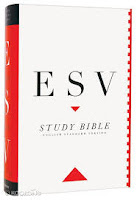
This is my newest addition, and so far I like it.  I've never used the ESV before, but as I am trying to get into more serious study, I value the literal translation of the ESV but wouldn't use it day to day.  It also uses colour maps which is visually appealing, however it has that single column format again.  Picky?  Maybe.  

The ESV itself is a highly regarded translation, and the notes seem to be a balance of application and background.  The essays are informative as well.  Unfortunately the personal size does lose content you find in the full sized version.  It would also have befitted from having a Bible reading plan.

The feel of the ESV Study Bible is quite academic, but that suits me well.  So far I like it, and could see myself investing in a better quality version - I only bought the paperback.  If I use it as much as I think I will, I will invest in a hardback version as this will be more durable.

UPDATE - I ordered a good quality ESV Study Bible, I use it as a reference Bible for study.
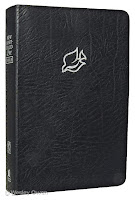

The New Spirit Filled Life Bible (NLT)
This is my newest study Bible and I am really enjoying it.  The notes are very helpful, it has a good cross referencing system and helps understanding of key Greek and Hebrew words.  The notes are written from a charismatic perspective, which helps me a lot as this is a new adventure with God for me.  There are also some excellent articles on the Holy Spirit, evangelism, book introductions and so on.

Which one should I get?
As someone once quipped - get the one you will read most!  I would suggest having a couple of Study Bibles.  I will continue using the NIV and NLT Study Bible as I love the translation itself and the study features are well balanced.  I can already see the ESV Study Bible becoming my second Bible to consult, so I would also recommend it.  

If you are a new Christian, get a feel for a translation you like, and get the Life Application Study Bible in that translation.  

I hope this helps - and feel free to share any others you may have!

Images: Google Images, except New Spirit Filled Life Bible which is from wesleyowen.com

Friday, 3 May 2013

New Functionality

I've added RefTagger to this site so that when you hover over a Bible verse I quote, you can read it yourself!  Just hover over a Bible verse and it should pop up!  Try John 3:16.

I hope that this will help you save time looking up verses, or if you don't have your Bible to hand. However, I would encourage you to still use your Bible - you should always read verses quoted in context.  You can always explore more at sites such as Biblegateway - and I have a lookup box on the right so you can easily look up passages there.

When I was testing it, I found that RefTagger didn't work too well with the new design, so I've reverted back to the "old" design.  If you see any broken links as a result, please let me know.

As before I am using my preferred translation, the New Living Translation. 

Wednesday, 17 April 2013

How to study the Bible

Ever wondered how to study the Bible?  This video will help!


Saturday, 13 April 2013

Homosexuality - God's Judgement?

I've been thinking about Romans 1:26-27 again.  I recently read an article which suggested that homosexuality is some kind of punishment from God.  These two verses are the most common verses used from the New Testament to condemn gay and lesbian relationships.  It says:
That is why God abandoned them to their shameful desires. Even the women turned against the natural way to have sex and instead indulged in sex with each other.  And the men, instead of having normal sexual relations with women, burned with lust for each other. Men did shameful things with other men, and as a result of this sin, they suffered within themselves the penalty they deserved.
I've previously discussed this passage and I don't want to repeat that again, I still think the key words here are "lust" and "shameful" - which I struggle to fit into loving gay and lesbian relationships.  I believe that this passage is not a condemnation of loving same-sex relationships, you can read why on this blog.  Instead I want to think about how we would apply this passage if it were talking about God's judgement. 

To see where the idea that homosexuality is God's judgement, it's important to read the whole passage in context - Romans 1:18-32.


Is it judgement?  In context I don't think so.  Verse 26 doesn't say that God gave them shameful and lustful desires, they had these desires already.  Verse 27 doesn't say that the penalty they suffered was inflicted by God.  It could merely be a consequence.  


But for the sake of argument, let's say it is a judgement.  Judgement for what?  Verses 18-25 are all about people who reject the one true God and worship false gods.  About a third of the world's population claims to be Christian.  So, we would expect to see more gay men in countries where Christianity is not the dominant religion. But we don't.  In every culture, about 4% of men are gay and 1% of women are lesbian.  The other problem with this view is people like me.  If being gay is a punishment for rejecting God, how do we explain gay Christians?  And wouldn't we expect to see more gay and lesbian people given that countries like the UK, Australia and the USA are becoming more and more secular?


Maybe the argument would only be that the penalty is the punishment.  Paul's wording is very specific - "they suffered within themselves the penalty they deserved".  The NRSV says, "received in their own persons the due penalty for their error".  So clearly this penalty is something you receive in your person.  What could that be?


Some have said the penalty is HIV/AIDS but I have a couple of problems with that.  Firstly, Paul uses the past tense, people were suffering this 2,000 years ago.  HIV/AIDS is a modern illness, so it cannot be what Paul was talking about.  Secondly, lesbian sex is the safest sex someone can have in terms of STI's.  Given that Paul is talking about women here as well, any STI would not fit because lesbian sex is quite safe.  Heterosexuals and gay men are much more at risk!  Finally, I have a problem with what that would say about God.  I did not choose to be gay, or to fall in love.  Am I to be punished with such a horrible illness because of something I did not choose to be?  What kind of God is that?


So, what's the penalty?  Can I suggest that the rest of this chapter provides the answer?


When a person rejects God, and suppresses their conscience, they lost touch with their Creator, with no moral absolutes there is nothing to guide them.  When a society rejects God, there is no restraint on what is acceptable.  CNN reports what life in North Korea is like at the moment - and we saw similar stories in communist Russia as well. In Muslim countries gay men are subject to heavy penalties for having sex with another man, ranging from flogging, to imprisonment and the death penalty.  


I believe that the penalty "received within themselves" is a change of personality and values. It's the consequences of being actively guided by self rather than the Holy Spirit.  The changes within a person, and their societies, is the penalty deserved.  But that leaves a question.  Isn't this penalty for homosexuals?


No.  The people Paul is talking about are not homosexuals, they are worshipers of false gods who practiced temple prostitution.  This fits what Paul wrote from verse 18 onwards, and what we know of Roman society in Paul's day.


I do not think that anything in Romans 1 condemns gay and lesbian relationships, and I do not believe that we are subject to "special" judgement because we fall in love.


Image: Google Images