Wednesday, 7 February 2018

The Best Bible Translation

Which Bible translation should you read?
As English speakers we are very fortunate to have so many translations of the Bible available to us.  And that in itself raises the question, which translation of the Bible should I use?

Firstly I would suggest almost any Bible!  All of the main translations are good translations of the Greek, Hebrew and Aramaic texts.  But, Bible translators have to broadly follow a translation philosophy.  In simple terms this means ranging from a word-for-word translation to a paraphrase.  Each has it's advantages and disadvantages.  The table below shows where the main translations fall on this scale.


Word for word translations are typically harder to read, partly because they try to preserve the word order as far as possible, and translate every word in the original languages.  That's useful for academic study but can produce language that just isn't normal English.  Take Matthew 5:2 as an example.  The English Standard Version (ESV) renders this, "And he opened his mouth and taught them, saying".  This is not something any of us would actually say.  Both the New International Version (NIV) and the New Living Translation (NLT) phrase it much better, "and he began to teach them".  

Proponents of word for word translations would argue that the NIV and NLT have dropped words - they argue that as these words were inspired by God, they should be translated.  I would suggest that what needs to be translated is the message, the ideas in the original text.  So I have no problem with "and he began to teach them" as to me that does translate the Bible accurately.  

Then we have idioms to deal with.  Take Amos 4:6 which the ESV renders, "I gave you cleanness of teeth in all your cities".  Was God advocating an Israelite dental hygiene programme?  No, the idiom refers to having nothing to eat.  So the NIV translates it, "I gave you empty stomachs in every city", and the NLT says "I brought hunger to every city".  Which is a better translation?  The word for word, or thought for thought?

How about this ESV translation of Psalm 147:10 - "His delight is not in the strength of the horse, nor his pleasure in the legs of a man".  Should this make a gay man blush?!  The NIV says, "in the legs of the warrior" to clarify the idiom.  It's about human strength, not actual men's legs.

Then there is the issue of gender.  Often literal translations use a lot of male gendered language, which isn't a bad translation - but they criticise others for using more inclusive language.  The most common example is the Greek "brothers" used of Christians collectively.  A lot of new translations use "brothers and sisters" since the original term does apply to women too.  Again to my mind that is accurate translation.  To claim a more literal translation is more accurate seems to me to be splitting hairs.  If the Greek means all the people, men and women, then "brothers and sisters" is more accurate in English today.

The ESV, NIV and NLT are all excellent translations of the Bible, they take differing approaches on how to translate but that doesn't make one less accurate than the other.  My approach is to use the NIV for my day to day reading, consult the ESV when studying, and use the NLT as a casual reader, and sometimes for day to day reading.

I would wrong to not re-state this here, avoid the New World Translation (see other posts on this for why). It's biased against Jesus' divinity, and phrases things in such a way as to support Watchtower teaching.

Images: Google Images

Friday, 17 October 2014

Is Jesus the Almighty God?

Image: Google Images

While I was online today, I saw a comment which noted that the Bible never says Jesus is the Almighty God. This position would be supported by Mormons, Jehovah's Witnesses, Muslims and others. But is this true?

No. A short Bible study in the Book of Revelation is very revealing. 

Let's start with Revelation 1:8 (ESV) which says, "I am the Alpha and the Omega,” says the Lord God, “who is and who was and who is to come, the Almighty." So here we have "the Almighty" call himself "the Alpha and the Omega". Alpha and Omega are the first and last letters of the Greek alphabet, which was the language the New Testament was written in. It's akin to saying "I am the A to Z". 

This is not controversial, God, the Almighty claims the title, "Alpha and Omega". However, this title is used 3 times in the Bible, all in the Book of Revelation. So can we gain any more information? Turn to Revelation 22:13-16 (ESV) which says:

"I am the Alpha and the Omega, the first and the last, the beginning and the end. Blessed are those who wash their robes, so that they may have the right to the tree of life and that they may enter the city by the gates. Outside are the dogs and sorcerers and the sexually immoral and murderers and idolaters, and everyone who loves and practices falsehood. I, Jesus, have sent my angel to testify to you about these things for the churches."

Did you notice? The Alpha and Omega identifies himself as Jesus! Only this time, Jesus is not claiming to only be Alpha and Omega, but also the first and the last. This is also a phrase that comes up three times in the Book of Revelation - interesting in a book that is big on symbolism! Can we get any more clarity? 

In Revelation 1:17-18 (ESV) we read, "But he laid his right hand on me, saying, “Fear not,I am the first and the last, and the living one. I died, and behold I am alive forevermore". So now we can be even clearer - the first and last died, and is now alive forevermore. This same point is also emphasised in Revelation 2:8 (ESV).

So, who is the Alpha and Omega? The first and the last, who died and rose again, Jesus Christ - the Almighty Lord God according to Revelation 1:8 (ESV).

Saturday, 30 August 2014

Father's Love Letter

My Child…

You may not know me, but I know everything about you. (Psalm 139:1) I know when you sit down and when you rise up. (Psalm 139:2) I am familiar with all your ways. (Psalm 139:3) Even the very hairs on your head are numbered. (Matthew 10:29-31) For you were made in my image. (Genesis 1:27) 

In me you live and move and have your being. (Acts 17:28) For you are my offspring. (Acts 17:28) I knew you even before you were conceived. (Jeremiah 1:4-5) I chose you when I planned creation. (Ephesians 1:11-12) You were not a mistake, for all your days are written in my book. (Psalm 139:15-16) I determined the exact time of your birth and where you would live. (Acts 17:26) You are fearfully and wonderfully made. (Psalm 139:14) I knit you together in your mother’s womb. (Psalm 139:13) And brought you forth on the day you were born. (Psalm 71:6) 

I have been misrepresented by those who don’t know me. (John 8:41-44) I am not distant and angry, but am the complete expression of love. (1 John 4:16) And it is my desire to lavish my love on you. (1 John 3:1) Simply because you are my child and I am your Father. (1 John 3:1) I offer you more than your earthly father ever could. (Matthew 7:11) For I am the perfect Father. (Matthew 5:48) Every good gift that you receive comes from my hand. (James 1:17) For I am your provider and I meet all your needs. (Matthew 6:31-33) 

My plan for your future has always been filled with hope. (Jeremiah 29:11) Because I love you with an everlasting love. (Jeremiah 31:3) My thoughts toward you are countless as the sand on the seashore. (Psalms 139:17-18) And I rejoice over you with singing. (Zephaniah 3:17) I will never stop doing good to you. (Jeremiah 32:40) For you are my treasured possession. (Exodus 19:5) I desire to establish you with all my heart and all my soul. (Jeremiah 32:41) And I want to show you great and marvelous things. (Jeremiah 33:3) 

If you seek me with all your heart, you will find me. (Deuteronomy 4:29) Delight in me and I will give you the desires of your heart. (Psalm 37:4) For it is I who gave you those desires. (Philippians 2:13) I am able to do more for you than you could possibly imagine. (Ephesians 3:20) For I am your greatest encourager. (2 Thessalonians 2:16-17) I am also the Father who comforts you in all your troubles. (2 Corinthians 1:3-4) When you are brokenhearted, I am close to you. (Psalm 34:18) As a shepherd carries a lamb, I have carried you close to my heart. (Isaiah 40:11) One day I will wipe away every tear from your eyes. (Revelation 21:3-4) And I’ll take away all the pain you have suffered on this earth. (Revelation 21:3-4) 

I am your Father, and I love you even as I love my son, Jesus. (John 17:23) For in Jesus, my love for you is revealed. (John 17:26) He is the exact representation of my being. (Hebrews 1:3) He came to demonstrate that I am for you, not against you. (Romans 8:31) And to tell you that I am not counting your sins. (2 Corinthians 5:18-19) Jesus died so that you and I could be reconciled. (2 Corinthians 5:18-19) His death was the ultimate expression of my love for you. (1 John 4:10) I gave up everything I loved that I might gain your love. (Romans 8:31-32) 

If you receive the gift of my son, Jesus, you receive me. (1 John 2:23) And nothing will ever separate you from my love again. (Romans 8:38-39) Come home and I’ll throw the biggest party heaven has ever seen. (Luke 15:7) 

I have always been Father and will always be Father. (Ephesians 3:14-15) My question is…will you be my child? (John 1:12-13) I am waiting for you. (Luke 15:11-32)

Love, Your Dad
Almighty God

Text: http://www.fathersloveletter.com
Image: Google Images

Saturday, 31 May 2014

King James Only

I have previously written about choosing a Bible translation but I've been seeing a lot on certain sites lately advocating the King James Bible only position.  This is the view that only the King James Version of the Bible is correct, and (usually) that it is literally the inspired word of God. 

Those of you familiar with my work know I use the New Living Translation for my own day to day reading, and the English Standard Version for study. Obviously I don't agree with the KJV Only view.

Essentially the notion is that God has preserved his word in the Majority Text (the texts translated into English that became the KJV).  They point out that in other Bibles (usually the NIV is the target!) there are missing verses, or verses are translated in a different way to the KJV.

I have a couple of problems with the KJV Only view which I will pose as questions.

  1. Given that the KJV was published in 1611, which version of the Bible was right in 1610?
  2. The KJV has been revised several times, is only the 1611 edition inspired?
  3. Do you believe that the translators of the KJV were inspired by God?  If so, why not other translators?
  4. What Bible should a German speaker use?
  5. If you point out that a verse is missing or translated differently, you are setting the KJV as the standard.  How different would that be if I used the NLT as the standard and accused the KJV of adding or mistranslating verses?
Perhaps from this you can see why I disagree with the KJV Only.  Perhaps the best thing to suggest in terms of which Bible translation you should use is the old adage - the one you will read!  

Image: Google Images

Friday, 9 May 2014

Book Review - God and the Gay Christian

I've done one book review before, but after reading this book, I just had to write another!

Matthew Vines has written what I think is the best book so far on what the Bible says about same-sex relationships. Matthew covers everything from where the traditional "non-affirming" view comes from through to examining what the Bible does say. 

For me this book is significant because it's written by someone who is an Evangelical Christian holding to the authority of the Bible.  Often people resort to trying to dismiss what the Bible says rather than seeking a full understanding of it - which is what Matthew has achieved.

One of my favourite chapters looks at the issue of mandatory celibacy for gay and lesbian people, and at how this conflicts with both Biblical teaching on celibacy and how the Church has understood celibacy.  That alone undermines the arguments against same sex relationships.  

"God and the Gay Christian" is very well researched, and the arguments are sound, one other thing I like is that Matthew gives his work a personal touch by telling how he and his family have been on a journey to better understand the Bible on this issue.  

I cannot say I have found anything I would disagree with in this book, and it's much more detailed and better argued than anything I have written so far!  My only criticism is that Matthew refers to John Boswell's work, which as I understand it has been undermined by scholars.  However, even ignoring that, this book builds a solid case in support of same-sex relationships.

If you are looking for a sound, Biblical study on what the Bible says about same-sex relationships - this is it! 

For someone who thinks the Bible condemns same-sex relationships, I would encourage you to read this book prayerfully and with an open mind.

Image: Google Images

Monday, 21 April 2014

Charismatic Christianity

Being open to the Holy Spirit
 is a vital part of being a Christian
I used to identify simply as an Evangelical Christian, but these days I am adding Charismatic to that description.  What does it mean to be Charismatic?

The Charismatic Movement goes back to Easter 1960 when an Episcopal priest related his Pentecostal experience to his congregation.  From there the movement exploded and is now a worldwide phenomenon. 


Charismatics believe that the gifts of the Holy Spirit are for today as well.  This comes from the Bible:


"A spiritual gift is given to each of us so we can help each other. To one person the Spirit gives the ability to give wise advice; to another the same Spirit gives a message of special knowledge. The same Spirit gives great faith to another, and to someone else the one Spirit gives the gift of healing. He gives one person the power to perform miracles, and another the ability to prophesy. He gives someone else the ability to discern whether a message is from the Spirit of God or from another spirit. Still another person is given the ability to speak in unknown languages, while another is given the ability to interpret what is being said. It is the one and only Spirit who distributes all these gifts. He alone decides which gift each person should have." (1 Corinthians 12:7-11)


There was a time when I believed that these gifts had ceased - mainly because I never saw them in the Churches I grew up in.  But I realised that this was the common experience of Christians in the first century. When I came back to Church after reconciling my faith and sexuality, I attended a Church which did believe the gifts were active today.  There I was able to meet people who had experienced the Holy Spirit directly.


In time I experienced this as well.


So, how are Charismatics different to Pentecostals?  The main difference is denomination.  Pentecostal Churches trace their history to the early 20th century whereas the Charismatic Renewal saw Charismatics remaining in their own Churches.  So a Charismatic Christian may be a Baptist, a Methodist, Roman Catholic, or an MCCer.  We share similar beliefs on the Holy Spirit, but retain our Christian traditions.  


Now that Easter is passed, we come to Pentecost in a few weeks.  Why not take time out to seek the Holy Spirit in your life?


Image: Google Images

Sunday, 20 April 2014

Happy Easter!

Christ is risen - he is risen indeed!

Because Jesus rose from the dead we can have new life in Christ.  That means a fresh start with God, hope for the future, and eternal life with God.

If you would like that new start with Jesus, or if you would like to find out more - please click on the link above on becoming a Christian.  

Sunday, 9 March 2014

Christianity or Islam?

Many people think that Islam and Christianity are just two ways of worshiping the same God.  Yahweh is Allah and Allah is Yahweh.  Is that true?

It is true that Arabic speaking Christians use the word "Allah" for God.  Simply because Allah just means "God".  If we have a man called John Smith, and I tell you that he is married with children you learn something about him.  If someone else tells you John Smith is single with no children, what would you conclude?

We see the same thing when we compare the Bible with the Qur'an.  


[Jesus asked] "why do you call it blasphemy when I say, ‘I am the Son of God’?" (John 10:36)
The Bible says, “but these are written that you may believe that Jesus is the Christ, the Son of God, and that believing you may have life in His name.” (John 20:31).
O People of the Book! Commit no excesses in your religion: Nor say of Allah aught but the truth. Christ Jesus the son of Mary was (no more than) an apostle of Allah, and His Word, which He bestowed on Mary, and a spirit proceeding from Him: so believe in Allah and His apostles. Say not “Trinity” :desist: it will be better for you: for Allah is one Allah. Glory be to Him: (far exalted is He) above having a son. To Him belong all things in the heavens and on earth. And enough is Allah as a Disposer of affairs. (Surah 4:171)
And behold! Allah will say: “O Jesus the son of Mary! Didst thou say unto men, “Worship me and my mother as gods in derogation of Allah”? He will say: “Glory to thee! Never could I say what I had no right (to say). Had I said such a thing, thou wouldst indeed have known it. Thou knowest what is in my heart, though I have not known what is in thine. For thou knowest in full all that is hidden.” (Surah 5:119) 
Jesus clearly says he is the Son of God, the Qur'an denies this.  Both cannot be true.  Notice also, that the claim is that Jesus asked us to worship his mother, which is not Biblical anyway.

So clearly Allah and Jesus are very different - they cannot be the same God.

Furthermore, a cursory reading of the New Testament shows Jesus was crucified, died and was raised from the dead.  The Qur'an denies this:
And because of their saying: We slew the Messiah, Jesus son of Mary, Allah's messenger - they slew him not nor crucified him, but it appeared so unto them; and lo! those who disagree concerning it are in doubt thereof; they have no knowledge thereof save pursuit of a conjecture; they slew him not for certain". (Surah 4:157)
Ancient Jewish and Roman records also record the crucifixion of Jesus, which means the Qur'an stands in opposition to both the Bible and secular history.

Furthermore the Qur'an goes so far as to claim to confirm the Bible.
He sent down to you this scripture, truthfully, confirming all previous scriptures, and He sent down the Torah and the Gospel. (Surah 3:3)
So for the Qur'an to be true, the Bible must be true.  But if the Bible is true, the Qur'an cannot be true. Therefore, whichever way we look at it, Islam is a false religion.  

Image: Google Images

What does the Bible say about Hell?

Hell is a topic many are uncomfortable with.  I want to take a quick look at what the Bible says about hell and where many of our ideas come from.

Many of our ideas about hell come from the imagination of writers and artists from the middle ages, and look more like Dante's Inferno than the Bible itself.  Then the King James Bible used the one word, "hell" to translate several different Hebrew and Greek words.  Modern translations have corrected that problem, but the KJV's influence is still strong in the popular mindset.

"Sheol" and "Hades"
The Hebrew word Sheol and the Greek word Hades are roughly equivalent.  They simply mean "the grave", or place of rest following death.  It had two areas, which we see in Jesus parable in Luke 16:22-23 ESV.  Abraham's side and Hades were the same place, but separated.  It is not permanent since we know from Revelation 20:13 that death and Hades give up their dead for judgement.

"Gehenna"
Gehenna is the Greek word that should be translated as hell.  Historically it was a place, in fact it was the rubbish dump outside Jerusalem, and it was always burning.

Is hell a place of literal fire?  I don't think so because lots of images are used for hell - including gloomy pits of darkness (Jude 1:13; 2 Peter 2:4), which would not make sense if it's literal fire.  We see the same thing in Jesus' teachings.  He uses "fire" and "darkness" interchangeably in Matthew 8:12; Matthew 13:42, 50; Matthew 32:15.  The other interesting notion some people have is that people in hell are tortured, however the Bible uses the word "torment" instead (Revelation 14:11).  I think what Jesus and the Bible writers were trying to do was portray an image of a place you do not want to end up.

Revelation 20:14 describes death and Hades being thrown into the second death.  Remember that in the Bible death just means "separation".  The first death is physical, when your soul and body are separated.  The second death is separation from God.

So what is hell?  It's being separated from God for eternity.  It is not a good place to end up, which is why Jesus and the Apostles warned us against it.  Is is also why Jesus died to take our punishment, so that we could spend eternity with God instead.

Image: Google Images

Saturday, 4 January 2014

Jehovah's Witnesses and 1914

Studying the Bible, not the Watchtower
or any other manual, will help us avoid error
It's been 100 years since the Watchtower said the world would originally end, and we are still here.  Yet the Watchtower tries to hide this from modern Jehovah's Witnesses.  The January 15, 2014 Watchtower Study edition says on p.28: "anointed Christians had keenly been anticipating 1914... They were not completely sure what would happen"  Really?  I have a copy of Studies in the Scriptures, Volume 2 - The Time is at Hand, published by the Watchtower in 1889.

On p98-99 it says: "within the coming twenty-six years all present governments will be overthrown and destroyed...we consider it an established truth that the final end of the kingdoms of this world, and the full establishment of the Kingdom of God, will be accomplished at the end of A.D. 1914."

How then can the Watchtower today claim "they were not completely sure what would happen"?  Seems to me that they were sure!  Obviously that didn't happen, and that should have been the end of the Watchtower, but they got creative and started teaching that 1914 was when Jesus began to rule in Heaven.  The generation alive on earth would not pass away before the world ended.

The book You Can Live Forever in Paradise on Earth, published in 1989 says (p154), "[Jesus] meant the generation of people who were living in 1914.  Those persons yet remaining of that generation are now very old.  However some of them will still be alive to see the end of this wicked system."

On p.31 of the January 2014 Watchtower it now argues that the generation is now 2 groups of Christians!  The second who were anointed during the lifetimes of the first group will not pass away until they see the tribulation.

The Watchtower is so tied to 1914 (based on the wrong 607BC date anyway) that they are getting very inventive with their theology.  

What about what the Bible plainly teaches in Deuteronomy 18: "“But you may wonder, ‘How will we know whether or not a prophecy is from the Lord?’ If the prophet speaks in the Lord’s name but his prediction does not happen or come true, you will know that the Lord did not give that message. That prophet has spoken without my authority and need not be feared."

As the Watchtower's predictions have not come true, how can anyone doubt that they are false prophets?

UPDATE - May 2014
In the May 1st Watchtower they ran an article on "Predicting the Future" in which they said, "RELIGIOUS LEADERS sometimes predict tragic worldwide events to warn mankind and gather followers. Doomsday prophet Harold Camping and his disciples widely advertised that the earth would be destroyed in 2011. Needless to say, the world is still here.

In light of their own failed predictions, is this a case of the pot calling the kettle black?

Tuesday, 31 December 2013

Happy New Year

I'd like to take this chance to wish you all a very happy new year.  May you know God's peace and blessing in 2014.

Tuesday, 29 October 2013

The Holy Spirit

For years as a Christian I wondered if "this was it".  Surely there must be "more".  For the last year, God has taken me on a journey, discovering who he is, and who the Holy Spirit is.  This is my summary of what God has been teaching me, and doing with me.

Who is the Holy Spirit?
Simply, the Holy Spirit is God (Acts 5:3-4) living within believers today.  We receive the Holy Spirit when we become Christians (Galatians 3:2).

What does the Holy Spirit do?
In the world, the Spirit convicts us of our sin, and God's righteousness (John 16:8).  In believers He is God's presence within us (John 14:16-17).  He gives us spiritual gifts (1 Corinthians 12:1 and 1 Corinthians 12:7).  These gifts range from tongues to healing and prophecy.

For a long time I was suspicious of the charismatic movement, and still have issues with some of it, namely the "Prosperity Gospel".  But as I studied Scripture I realised that there is a massive difference between the experience of the first Christians, and many of us today.  As I researched my own Church (the Metropolitan Community Church) I found that there is a large charismatic movement within my own denomination as well - this is true of many Churches.  In fact the first Church to recognise the charismatic movement was the Roman Catholic Church.

The more I studied the Bible, the more I realised that there is more!  So I asked God to fill me with the Spirit (some people call it being baptised in the Spirit - don't get hung up on the terminology!).  Nothing happened at first until I was challenged to ask for, and use the gift of tongues.  Well, I wasn't doing that in public!

At home, I prayed again, and I opened my mouth to worship Jesus, and asked the Holy Spirit to speak through me, and sure enough, I did not understand the words coming out of my mouth!

I recently went to see a Christian who has the gift of prophecy.  I do not know her at all, I went on a friend's recommendation.  This is not all about the future, prophecy is being able to hear what God says, and speak it.  She knew about my life, what I prayed as a child, the kind of work I do, as well as what I would not accept as true!  And it wasn't vague, it was specific things only God would have known.

What about you?
Maybe you are wondering if "this is all there is" to the Christian life.  I'm learning that there is more!  I'm stepping out in faith into a new adventure with Jesus, and it's proving to be very exciting.

Image: Google Images

Wednesday, 9 October 2013

New New World Translation

The Watchtower Bible and Tract Society (Jehovah's Witnesses) have released a revision of the New World Translation.  I'll refer to it as the NWT2013. 

I've previously written about the JW "Bible", but this new edition calls for a review.  As I've only recently downloaded it, this post will be a work in progress (check last update date below).

The first thing I notice is the additional articles and book introductions in the NWT2013, which reminds me of the Gideon Bibles we were given at school.  One of the most surprising things is that this new edition neatly co-incides with the doctrinal change over the year 1914.  In fact, on p1767 (in the PDF) 1914 becomes "About 1914".  They are obviously moving away from such a strong emphasis.  They used to teach that the world would end before the generation alive in 1914 died out.  As 2014 marks 100 years since 1914, this is obviously looking to become another false prophecy.  So, they're sidelining it now.
NWT2013 - brackets gone!

The text of the NWT has also been altered.  In my last article on the NWT1984 I commented on use of square brackets in Colossians 1 and how misleading it is to add the word "other", even in brackets.  In the NWT2013 the brackets have disappeared completely.

If you can, get your hands on the Kingdom Interlinear Translation (KIT) which was published by the Watchtower - it clearly shows that the word "other" is not in the text.  (The book is hard to come by, however it is available on the JW app)  The NWT2013 has gone to extreme lengths to hide the obvious teaching that Jesus is in fact God.

Having said that, there has also been a substantial change (or admission?) on John 1:1.  The main text reads as it did in the 1984 edition.  However, the Watchtower has always argued that it should never be translated as "the Word was God", and barely conceded that "divine" was correct.  However in the NWT2013 there is a footnote to John 1:1.  It acknowledges that "divine" is possible.

Of course, any world-class Bible scholar will still tell you that John 1:1 should read, "the Word was God". 

There does seem to be more in the line of alternate translations in the footnotes, which can only be an attempt to make the NWT2013 seem more scholarly. 

On a more positive note, John 17:3 has now been translated correctly with the incorrect translation relegated to a footnote.  But I wonder how many "rank and file" JW's expect a real relationship with God? 

One other interesting thing to note is that the 2013 edition is much easier to read.  Comparing verses with the NIV and ESV, I would say it's like reading a combination of them - in fact a few of the verses are rendered the same way as the ESV which suggests it was used as source material (or perhaps the RSV or NRSV which are the same "family" of translations as the ESV).  

The NWT2013 is as deceptive (or more in some places) as its predecessors as a translation of the Bible.  It is still to be avoided as a Bible for any serious student of the Scriptures.  

Last update: 13 May 2014

Images: Google Images, screen shots of my PDF copy
Source: http://www.jw.org/en/jehovahs-witnesses/faq/new-world-translation-accurate/ (Accessed May 2014)

Wednesday, 17 July 2013

Try Praying

It’s the work of a traffic planner, a shop manager, a writer, a designer, an entrepreneur, a civil engineer and others.
A conversation on a train went like this.  The guy in his 20s was asked, “Do you ever pray? “  His reply was, “Yes.  I prayed for two people who were seriously ill.  One died and the other got better.”  He concluded he’d had 50% success.
This reflex – the desire to reach out to God – is basic to many, many people. Trypraying is a resource for people like that: no church connection or interest, but open to find out about God. The trypraying booklet is a 7-day prayer guide and is now being used by many to pass on to friends and family with a few words of encouragement – ‘Why don’t you try praying for a week and see what happens in your life?’  Start at http://www.trypraying.org/start-here/
Image and text: http://www.trypraying.org/

Thursday, 11 July 2013

Jehovah's Witnesses - challenge accepted!

I met the Jehovah's Witnesses today, and they gave me a copy of the Watchtower magazine.  On page 7 a challenge was issued.  It is this:  "The next time you meet Jehovah’s Witnesses, why not ask them why they trust their religion? Examine their teachings and their record."

Okay, let's do that:


  1. They predicted the end of the world in 1914 (later changed), 1925 and 1975 (to name a few).  
  2. They are as guilty as certain other religious organisations on child abuse and cover-ups.
  3. They do not believe historic Christian teachings on the Trinity, the soul, salvation or eternity (to name a few).  Their beliefs contradict the Bible.
  4. They mistranslated the Bible, and published it as the New World Translation - so that they have a Bible that fits their beliefs.
  5. A "Bible study" turns out to be a study of a Watchtower book, rather than the Bible.
  6. Their organisation bans "independent thinking", encouraging complete obedience to the Watchtower Society.  Members are not allowed to read books critical of JW teachings.
So their teachings and record show that they are not the true Christian faith they make themselves out to be, but are in fact a cult based on Christianity.

If you are thinking about studying with the Jehovah's Witnesses, by all means, "Examine their teachings and their record."

Image: Google Images

Saturday, 22 June 2013

Prayer

We talk about prayer a lot, but what is it?  How should we pray?  Why should we pray?

Prayer is simply talking with God.  One of the fundamental issues the Bible addresses is our relationship with God.  In John 17:3 Jesus said that to have eternal life meant that we are to know God.  In fact in Matthew 7:23 Jesus says that knowing him will make the difference between saved and unsaved come Judgement Day.

So If relationship with God is that important, how do we build that relationship?  Studying the Bible is obviously important - it's the main way God communicates with us.  But prayer allows us to communicate with God, too.  We can tell God what's on our minds, share our joys and sorrows with him, ask for forgiveness, pray for friends, family and even nations.

Some people pray as if they were presenting a shopping list to God, but I believe we should also listen to what Jesus is saying to us (John 10:16).  The communication needs to run both ways, so make time to listen to God as well.  Another thing we should do is meet with others to pray (Matthew 18:20).  If your partner is a Christian you should regularly pray together.  Keeping God at the centre of your relationship can only make your relationship stronger.

There is another aspect of prayer that I believe is important.  If you have the gift of tongues, you should also pray in tongues as this will also build you up (1 Corinthians 14:4).

Finally, when God is working in your life, talk about it!  Share it, tell others - give God the glory.  In other words, witness to what God is doing in your life.

Images: Google Images

Monday, 6 May 2013

Study Bibles

How do those of us who don't speak Hebrew, Aramaic and Greek access the Bible?  Well, we depend on others to translate the Bible for us.  I have already looked at Bible translations but I wanted to think about Study Bibles.

What is a Study Bible?
A study Bible includes the text of a translation, and usually has the following features:
  • Cross references (which help us find similar passages or parallel verses)
  • Notes (to understand the meaning or context)
  • Maps (so we can see where different events happened)
  • Charts (to piece together the overall picture)
  • Essays (often on the background to books, or on a historical time frame, such as the time between the testaments)
  • Index/Concordance (to help us locate passages on a subject, or verses we know but can't find)
  • More recently, they include online access to an electronic version.
These tools are so useful.  One thing I suggest is that when you buy a Study Bible, get the "personal size" rather than the full size.  The full size ones are heavy, and not easily taken to Bible studies or worship services.  Sometimes this means you lose some content (the NLT Study Bible being an exception to this) but overall it's worth it.  When I was talking with Mormon missionaries I used a full sized study Bible, which was bulky and not so easy to use.  On the ESV Study Bible website, they note that someone joked about a tornado coming - "take cover under your ESV Study Bible"!  Trust me, this is a valid point!  You want a Bible you can hold and use, rather than one you need a desk for!

Because of the useful features, I think every Christian should own at least one Study Bible.

Which Study Bible should I get?
I have 5 study Bibles at the moment, so I thought I would review each, plus the Life Application Study Bible (which I gave away a few years ago).  They all have advantages and disadvantages, but it's worth having a couple - for reasons that will become clear below.

Life Application Study Bible
The Life Application Study Bible is available in every major translation (NIV, NLT, NASB, NKJV etc).  The notes focus on how to apply the Bible in daily life.  I really love some of the essays, but for serious study I wouldn't recommend it.  This is ideal for new Christians though.  The notes are generally Evangelical and like the NIV Study Bible (see below) avoid controversial issues.  One thing I find odd is the Bible text is a single column format, which is only strange because I am used to double columns!

NIV Study Bible
I love the NIV Study Bible.  It has all the standard features of a Study Bible, but one or two drawbacks as well.  On the positive side, the notes provide lots of historical and archaeological background, there's lots of colour, maps - it's visually appealing.  On a negative note, some notes avoid controversial issues and certainly tow the line on many complex issues.  For example, can you lose your salvation?  All the verses which suggest you can are either ignored, or glossed over.  For me, the fact that Christians can, and do, disagree on these areas should be acknowledged and discussed.

If you are a devotee of the NIV (which by all accounts is an excellent translation) then this may be a useful addition to your library.

Fire Study Bible
The Fire Study Bible also uses the NIV, but it's a Pentecostal Study Bible.  While the NIV Study Bible is decidedly Evangelical, it's nice to see a Pentecostal Study Bible.  The notes focus on practical application and on the Holy Spirit, and there is a good deal of historical background too.  I've not used this too much yet, so it's too early to recommend - but so far it's been useful.  Most Study Bibles gloss over the Holy Spirit, so it's nice to have this one for a different "angle".

Chronological Life Application Study Bible
This is a version of the Life Application Study Bible series which uses the NLT.  The notes therefore have the same limitations as the standard Life Application Study Bible.  One drawback is that the Chronological Life Application Study Bible doesn't have the essays in the standard Life Application Study Bible.  There is also the problem of finding a verse!  Because the Biblical text is not in the order we're used to, it's hard to locate verses.  So it's useless to take to Church or Bible Study groups.

What I love about the Chronological Life Application Study Bible is that the Bible text is arranged in chronological order.  This means when you read through the Bible - especially the New Testament - you get a whole new perspective.  When you see how events unfold, some other things make more sense.  One other thing I love is that it's in full colour, uses photos and colour illustrations.  This makes it visually pleasing!

NLT Study Bible
The NLT Study Bible has an Evangelical focus, but unlike the NIV Study Bible, the NLT Study Bible doesn't avoid controversy.  The notes acknowledge where Christians disagree (sadly, not on the homosexuality issue though) and explain each view.  Sadly it isn't in colour so it looks a bit dated compared with others.

The NLT Study Bible seems to attempt to find a middle way between application and background which is great.  As I mentioned, a major "plus" of the personal sized edition is that it doesn't lose any of the content in the size reduction.

ESV Study Bible (Personal Size)
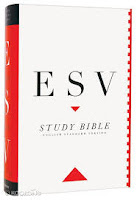
This is my newest addition, and so far I like it.  I've never used the ESV before, but as I am trying to get into more serious study, I value the literal translation of the ESV but wouldn't use it day to day.  It also uses colour maps which is visually appealing, however it has that single column format again.  Picky?  Maybe.  

The ESV itself is a highly regarded translation, and the notes seem to be a balance of application and background.  The essays are informative as well.  Unfortunately the personal size does lose content you find in the full sized version.  It would also have befitted from having a Bible reading plan.

The feel of the ESV Study Bible is quite academic, but that suits me well.  So far I like it, and could see myself investing in a better quality version - I only bought the paperback.  If I use it as much as I think I will, I will invest in a hardback version as this will be more durable.

UPDATE - I ordered a good quality ESV Study Bible, I use it as a reference Bible for study.
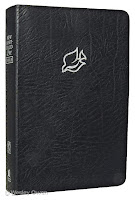

The New Spirit Filled Life Bible (NLT)
This is my newest study Bible and I am really enjoying it.  The notes are very helpful, it has a good cross referencing system and helps understanding of key Greek and Hebrew words.  The notes are written from a charismatic perspective, which helps me a lot as this is a new adventure with God for me.  There are also some excellent articles on the Holy Spirit, evangelism, book introductions and so on.

Which one should I get?
As someone once quipped - get the one you will read most!  I would suggest having a couple of Study Bibles.  I will continue using the NIV and NLT Study Bible as I love the translation itself and the study features are well balanced.  I can already see the ESV Study Bible becoming my second Bible to consult, so I would also recommend it.  

If you are a new Christian, get a feel for a translation you like, and get the Life Application Study Bible in that translation.  

I hope this helps - and feel free to share any others you may have!

Images: Google Images, except New Spirit Filled Life Bible which is from wesleyowen.com

Friday, 3 May 2013

New Functionality

I've added RefTagger to this site so that when you hover over a Bible verse I quote, you can read it yourself!  Just hover over a Bible verse and it should pop up!  Try John 3:16.

I hope that this will help you save time looking up verses, or if you don't have your Bible to hand. However, I would encourage you to still use your Bible - you should always read verses quoted in context.  You can always explore more at sites such as Biblegateway - and I have a lookup box on the right so you can easily look up passages there.

When I was testing it, I found that RefTagger didn't work too well with the new design, so I've reverted back to the "old" design.  If you see any broken links as a result, please let me know.

As before I am using my preferred translation, the New Living Translation. 

Wednesday, 17 April 2013

How to study the Bible

Ever wondered how to study the Bible?  This video will help!


Saturday, 13 April 2013

Homosexuality - God's Judgement?

I've been thinking about Romans 1:26-27 again.  I recently read an article which suggested that homosexuality is some kind of punishment from God.  These two verses are the most common verses used from the New Testament to condemn gay and lesbian relationships.  It says:
That is why God abandoned them to their shameful desires. Even the women turned against the natural way to have sex and instead indulged in sex with each other.  And the men, instead of having normal sexual relations with women, burned with lust for each other. Men did shameful things with other men, and as a result of this sin, they suffered within themselves the penalty they deserved.
I've previously discussed this passage and I don't want to repeat that again, I still think the key words here are "lust" and "shameful" - which I struggle to fit into loving gay and lesbian relationships.  I believe that this passage is not a condemnation of loving same-sex relationships, you can read why on this blog.  Instead I want to think about how we would apply this passage if it were talking about God's judgement. 

To see where the idea that homosexuality is God's judgement, it's important to read the whole passage in context - Romans 1:18-32.


Is it judgement?  In context I don't think so.  Verse 26 doesn't say that God gave them shameful and lustful desires, they had these desires already.  Verse 27 doesn't say that the penalty they suffered was inflicted by God.  It could merely be a consequence.  


But for the sake of argument, let's say it is a judgement.  Judgement for what?  Verses 18-25 are all about people who reject the one true God and worship false gods.  About a third of the world's population claims to be Christian.  So, we would expect to see more gay men in countries where Christianity is not the dominant religion. But we don't.  In every culture, about 4% of men are gay and 1% of women are lesbian.  The other problem with this view is people like me.  If being gay is a punishment for rejecting God, how do we explain gay Christians?  And wouldn't we expect to see more gay and lesbian people given that countries like the UK, Australia and the USA are becoming more and more secular?


Maybe the argument would only be that the penalty is the punishment.  Paul's wording is very specific - "they suffered within themselves the penalty they deserved".  The NRSV says, "received in their own persons the due penalty for their error".  So clearly this penalty is something you receive in your person.  What could that be?


Some have said the penalty is HIV/AIDS but I have a couple of problems with that.  Firstly, Paul uses the past tense, people were suffering this 2,000 years ago.  HIV/AIDS is a modern illness, so it cannot be what Paul was talking about.  Secondly, lesbian sex is the safest sex someone can have in terms of STI's.  Given that Paul is talking about women here as well, any STI would not fit because lesbian sex is quite safe.  Heterosexuals and gay men are much more at risk!  Finally, I have a problem with what that would say about God.  I did not choose to be gay, or to fall in love.  Am I to be punished with such a horrible illness because of something I did not choose to be?  What kind of God is that?


So, what's the penalty?  Can I suggest that the rest of this chapter provides the answer?


When a person rejects God, and suppresses their conscience, they lost touch with their Creator, with no moral absolutes there is nothing to guide them.  When a society rejects God, there is no restraint on what is acceptable.  CNN reports what life in North Korea is like at the moment - and we saw similar stories in communist Russia as well. In Muslim countries gay men are subject to heavy penalties for having sex with another man, ranging from flogging, to imprisonment and the death penalty.  


I believe that the penalty "received within themselves" is a change of personality and values. It's the consequences of being actively guided by self rather than the Holy Spirit.  The changes within a person, and their societies, is the penalty deserved.  But that leaves a question.  Isn't this penalty for homosexuals?


No.  The people Paul is talking about are not homosexuals, they are worshipers of false gods who practiced temple prostitution.  This fits what Paul wrote from verse 18 onwards, and what we know of Roman society in Paul's day.


I do not think that anything in Romans 1 condemns gay and lesbian relationships, and I do not believe that we are subject to "special" judgement because we fall in love.


Image: Google Images